I recently posted a review of a James Bond book on Goodreads. In it, I briefly touched on each of the stories in the book, making comparisons to the previous Bond novels and to the film franchise. It wasn’t anything amazing as far as reviews go, just the thoughts of a reader reflecting on a book. Because I had listened to the audio version, I made a final comment about the narrator’s performance.
No big deal.
Within a few hours, I received this reply: “Impressive summary. Well-formatted and expressive; lucidly composed. Except that you apparently didn’t ‘read’ these tales? You ‘listened’ via some silly audio version? Sadly, this is bogus. Inauthentic. All too common these days, but totally not the way to absorb literature, while ‘multi-tasking at the same time’.”
The reply did continue, addressing my comments about the book’s sexism and racism. “One other remark to make: travel more overseas. Your comments on ‘racism’ and ‘misogyny’ are provincial-American. At odds with the way the world actually is out there.” But that’s not what I want to talk about. An anonymous troll on the internet has rolled their eyes as someone’s views, calling them naive. Nothing new. Nothing worth arguing with.
However, the sentiment that the medium that I used to read the book is somehow wrong or inferior struck a nerve. I’ve heard this argument many times and from all varieties of people.
So to anyone that claims that listening to an audio book is inferior, and to the troll that gave me such wonderful statements to refute, I say this: Deal With It.
Let’s break this down, shall we?
“…silly audio version“ – Audio books are the fastest growing publisher market. Millions of readers are using them. Gone are the days of highly abridged tomes of cassette tapes marketed to the visually impaired. Audio book performers are highly-regarded actors (like Samuel West, who read the audio book I was reviewing). With services like digital streaming, audio books are not some novelty fad. Like e-readers (which also got shit on for years), they’re here and they’re here to stay.
“…totally not the way to absorb literature…” – This line fascinates me. Ignoring the part where he refers to a 1960’s Spy-Fi collection as “literature,” the troll’s post opens with praising my summary. He has acknowledged that I understand each of the stories enough to comment on them. In fact, his post closes with this: “Otherwise, a really fine review and I was pleased to sift through it. Glad you enjoyed the stories.” So if I absorbed the stories enough to compose a “really fine review,” how in the fuck can you then say that I didn’t absorb the story? The fact I gave it a thorough review proves that I did because, News Flash: People can absorb by listening.
“…‘multi-tasking at the same time’‘ – Ah, so you were watching me while I listened? Creeper. Seriously, though, I hate this argument. Yes, audio book readers can get distracted while reading. I drive while listening to audio books. However, I’m real interested in the notion that people that visually read are not distracted at all. Really?

It’s nice to imagine that anyone reading a book is sitting in a comfortable wing back chair, the only sounds being the soft crackling of a fire, but it’s also fundamentally bullshit. Reading a book doesn’t mean that life stops. There’s still noises, keeping an eye out on a kid, the lingering thoughts in the back of your head reminding you to pay the electric bill so you can stop using a fire to read by. Your mind wanders, you skim, you race through a few pages between other tasks, and you are rarely, if ever, 100% Distraction Free.

Since I started Audible, my reading has gone up exponentially. The bulk of my reading is with audio books. I enjoy them. Yes, I have gotten distracted at times and had to listen to a part a second time (maybe the troll never heard of Rewind), but no more often than times I’ve had to go back a re-read part of a book that I realized I was skimming.

So, while I might not read the same as someone else, no one gets to tell me that I’m “Doing It Wrong.”
 Then my friend and fellow author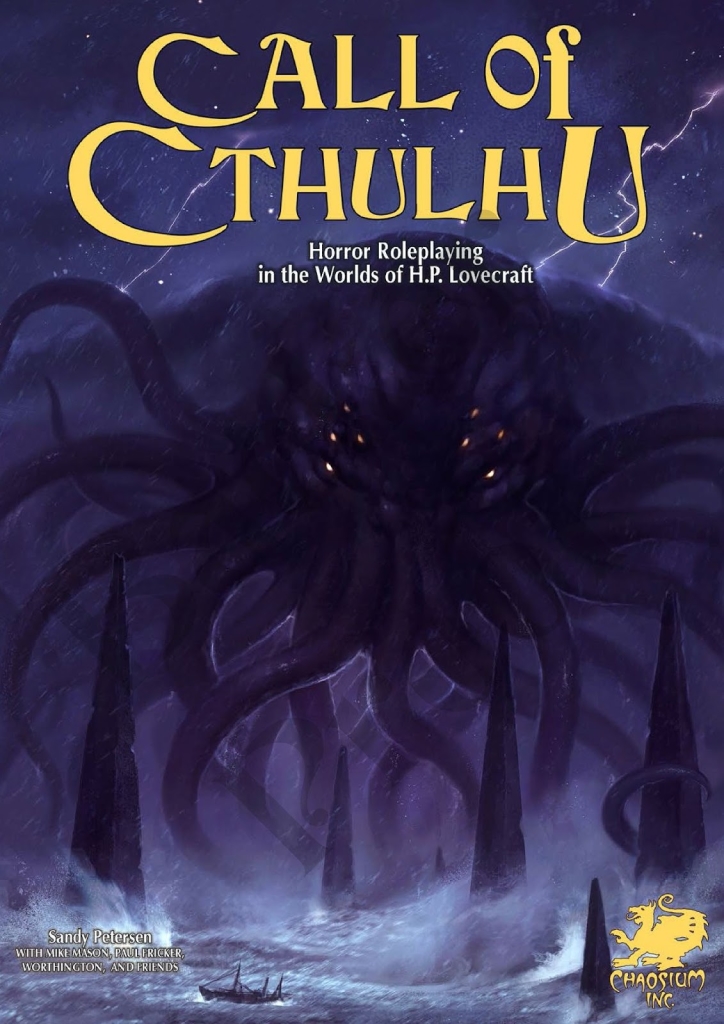
 One of the biggest selling points for me was the Chase Rules. Normally, chases in an RPGs are handled by taking Initiative and Movement Rate. Fastest movement wins. Pretty simple. It’s also kinda boring. But Chaosium knew that with combat being so brutal, and most of the monsters being so deadly, that characters would spend more time running from baddies than they would fighting them. So they made Chases a large part of the game (as large as Combat), and man they’re fun.
 Finally, the coolest thing about 7th Edition CoC is that it’s backwards compatible. Meaning that a GM can pick up a 1980’s adventure module and can convert the game to 7th Edition in their head. It take a little getting used to, and it isn’t my ideal way of running a module, but it’s also awesome. That means that any CoC adventure that has ever been written over the last 35 years are still available for Game Masters to use. One of the things that saddened me when we started 5th Edition D&D was that all of the modules and supplements for each previous edition (many of which I owned) were completely obsolete and that future generations of players would never know them. In fact, when we played 5th Edition D&D, I had converted The Secret of Bone Hill, a classic 1st Edition adventure that I loved, to 5th Edition. The conversion process was hell. It was insanely difficult and took a lot of time. The results were fantastic, but I’d be real hesitant to convert any other adventures to 5th Edition after that.
 So far this year, we’ve played four Call of Cthulhu adventures: The Haunting and Dead Light, which are 7th Edition, Crack’d and Crook’d Manse (6th Edition), and Edge of Darkness (5th Edition). All have been a massive success. In fact, with Edge of Darkness being an adventure that’s been around so long, there were some great fan-made supplements and handouts for it.








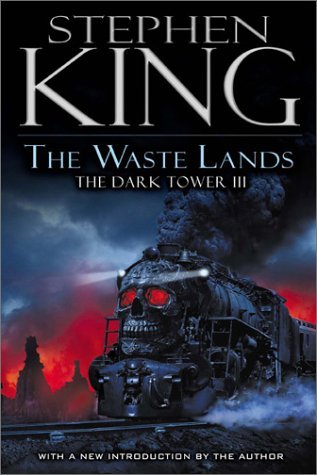 A good example of this is the Dark Tower Series. Readers can enjoy the first book, The Gunslinger, and be perfectly happy. Yes it ends with a setup, but the story is complete. The Gunslinger chased the Man in Black across the desert and then caught him. You can end there. However, readers that continue the series will enjoy several self-contained adventures along the way, even experiencing the massive cliffhanger ending at the end of The Waste Lands. That book is the only one that ends on a cliffhanger because the heroes are in an active moment of peril in the last sentence. However, even then, the story still has a beginning, middle, and end (They enter the waste lands, they leave the waste lands.)
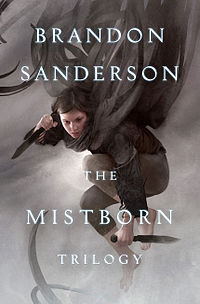 Even though I say that there is a specific time that a Cliffhanger between series installments is acceptable, a Setup is much, much nicer. Harry Potter is a perfect example of a series that follows these rules, choosing a setup, versus a cliffhanger. A reader can enjoy Harry Potter and The Sorcerer’s Stone and leave there being perfectly happy. The readers that do keep going with the series are treated to small, self-contained stories that occur while the larger narrative is unfolding. Another favorite of mine in the Mistborn Series, which follows the same rules.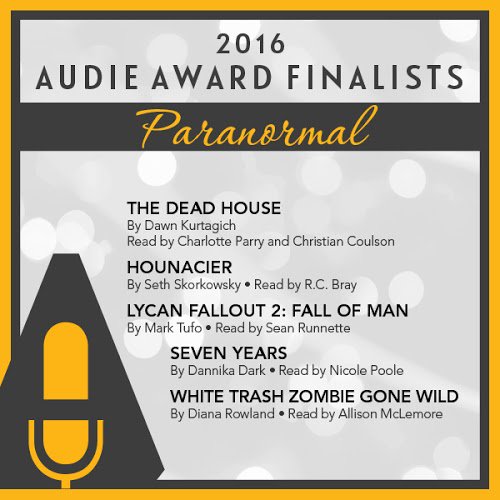
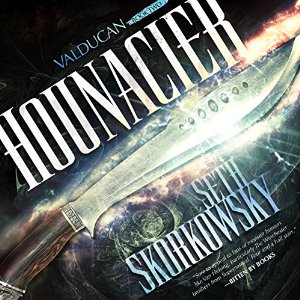
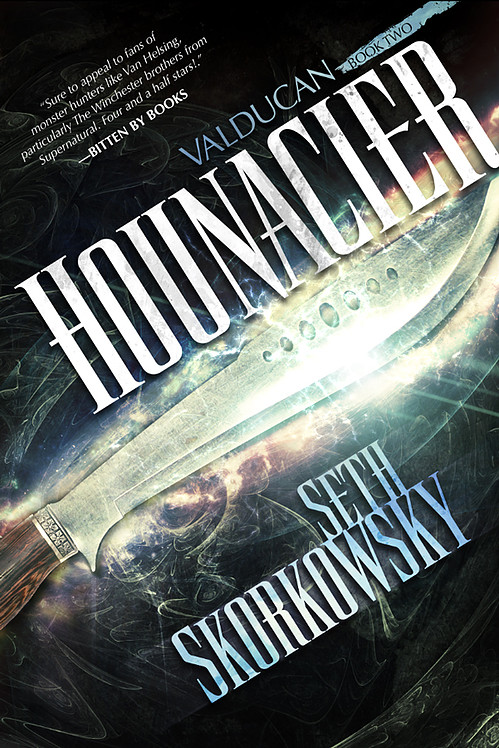
 – Something lurks beneath the City of Light and Valducan knights Nick Tavitian, Colin Delaney, and new recruit Malcolm Romero intend to find it. But as they search the catacombs for their quarry, something hungry is watching them from the darkness.
 n December 27th, 2013, Joe Martin with
  But I made no apologies. My wife and I refer to