Interview at the RoundTable Podcast

RTPThe fine folks over at the RoundTable Podcast interviewed me for their “20 Minutes With…” series.  We discuss pulp fantasy, conflict characters, Dungeons & Dragons, travel, Star Trek, and much more.  I had a lot of fun talking the craft and shooting the breeze with co-hosts Dave Robison and Alasdair Stuart. 

You can check the podcast HERE.  Don’t be fooled by the 20 minutes name. We run for 44 minutes and I could have enjoyed chatting with them for hours longer.

Next week I’ll be back for a writing workshop episode.

Enjoy.


The 2015 Audie Awards and Other News

Last week I attended the APA’s annual Audie Award Gala.  While Dämoren lost Best Paranormal to M.R. Carey’s The Girl With All the Gifts, I had a fabulous time.

RC. BrayI met Dämoren’s narrator R.C. Bray, who was also nominated for several other awards and did win the Audie for Andy Weir’s The Martain.  R.C. will also be reading for Hounacier as well as Mountain of Daggers.

Speaking of Hounacier, Audible’s editors have selected it for their Summer Preview of their most anticipated upcoming releases.  It’s set to release 7/21.  I don’t have a date yet for Mountain of Daggers Audible release, but R.C. told me he should be recording it soon after he’s finished with Hounacier.  Hopefully with 2 new audio books in 2015 I might make it back to the Audies soon.

MedalI’d really like to have another medal to go along with the one bestowed on Dämoren.

In other news, Bloodshot Books has just signed my Valducan short story The Serpent’s Army for their upcoming Not Your Average Monster Anthology. The story will follow Clay and Schmidt in the 1980’s.  Expected publication date is late September 2015.

In the meantime, I’m still plugging away on Ibenus and have a couple more stories out there waiting acceptance. Hopefully soon I’ll have updates on those.


The Influence of 80s Cartoons

Recently on the  Reddit r/Fantasy page, a member posed a simple question, “What got you into Fantasy?”.  My first thought was, “The Hobbit.”  I read it when I was 12 and it opened the door for my reading of fantasy novels.  Then I realized that by the age of 12, I was already a huge fantasy fan.  The Hobbit was only the first true fantasy novel I’d read.  So I started thinking further back, searching for what exactly was the origin point for my love of the genre.

The answer I decided was cartoons.  While movies like Robin Hood, Last Unicorn, Sword and the Stone, and plenty of others certainly had their influences, my biggest ones were either every Saturday morning or every day after school.

The Smurfs (1981)

Yeah, the Smurfs is cheesy. But we have magic, castles, and all the foundations of fantasy right there.  The Smurfs was a weekly ritual for kids of my generation and certainly had its influence on us. It also had the catchiest and stupidest theme song ever, composed of only the words, La la la la la la.


He-Man and the Masters of the Universe (1983)

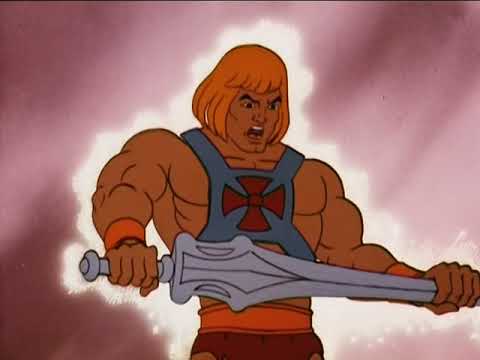
He-Man was awesome.  It was some sci-fi/fantasy hybrid where characters were just as likely to use a broadsword and magic as they were a laser gun.  I owned all the toys and watched the show religiously.  I even watched She-Ra which was the spin-off show aimed at girls and that 8-year olds like myself were’t supposed to admit that they watched (now that I’m in my 30’s I can openly confess that I freakin loved She-Ra).  There’s a debunked rumor that the toy line was originally meant to be for the Conan movie before Mattel realized how much violence and sex was in it, but that was only a rumor. However, He-Man’s inspiration is still obviously from old pulp stories and art for Conan and John Carter.


Thundarr The Barbarian (1980)

It amazes me how many of my friends don’t remember this show.  It kicked so much ass.  We have a post-apocalyptic fantasy setting where every week they somehow work some famous monument into the background.  One week Thundarr is battling in front of a chipped and overgrown Mount Rushmore, next week he’s stomping heads in front of the Eiffel Tower. While my sense of geography was certainly thrown off by the show, I loved it every time it came on. Thundarr was probably the most original and purest pulp of all the cartoons from my childhood.


ThunderCats (1985)

Probably one of the best made of the lot.  Thundercats was awesome and the art was great.  It was in the same Sword & Laser or Sword & Planet genre as He-Man, but was about freakin cat people.  An entire generation fell in love with Cheetara (myself totally included).  This was unquestionably Pulp-era inspired.  Years later, when I finally did read R.E. Howard’s Conan tales, I had the strangest deja vu when the story ‘The Devil in Iron’ started out exactly like an old ThunderCats episode I remembered from years before. And while I could remember episodes with such detail for years, I had also somehow completely wiped out any memory of Snarf.  When Cartoon Network first started carrying ThunderCats I first thought that they had somehow added the horribly annoying creature because my memory had perfectly removed him.


Dungeons & Dragons (1983)

When I was little, I had no clue that Dungeons & Dragons was a role-playing game. I thought it was a roller coaster.  No clue why the show’s creators took the roller coaster route, but they did.  The cartoon follows a group of kids that are magically transported to a D&D world. Each of the kids fills one of the classic D&D archetypes as they set out on adventure to make their way home.  They show was fun, but very short-lived.


Dragon’s Lair (1984)

I never played the video game from which the cartoon was based and didn’t even know it was a video game for several years later.  What I most loved about it was that before commercial breaks our hero, Dirk the Daring, was confronted with a choice on how to proceed (like fight the mud-men or battle the tentacle monster). After the break, we would see the results if Dirk chose incorrectly (i.e. how he dies) and then show Dirk choosing the correct path and then the story continues.  The Choose Your Own Adventure aspect was very cool. It was also the only show that stressed the danger our hero was in because things like death was a real possibility for him.


Adventures of the Gummi Bears (1985)

Gummi Bears followed a group of adorable bear people in a classic European fantasy setting.  While considered nothing but myth to all but a few humans, the Gummi Bears go around using magic and helping people.  When they find themselves in some kind of bind they’d down a bottle of their super-secret gummiberry juice which would make then bounce around like rubber (a superpower that you wouldn’t think would be as useful as they make it out to be).  The villain, Duke Igthorn, is always seeking for the secret of the gummi bears’ magic, especially the juice because when humans drink it they don’t become bouncy flubber, but gain super-human strength.  I’ve heard some criticism of the show because the gummiberry juice promotes drug use.  Honestly, I suspect that anyone who came up with that idea was either stoned themselves or were some fantasy-hating troll that can’t understand the idea of awesome.


Super Bonus Show

The Pirates of Dark Water (1991)

OK, so this one isn’t 1980’s, but it came out prior to my reading of The Hobbit and was also so awesome that I’m counting it.  Pirates of Dark Water was freaking fantastic.  Here we follow a young pirate that is trying to save the world from a substance known as Dark Water.  Unlike the other shows, this cartoon followed a linear narrative and singular quest.  Of course they had to throw in an annoying Jar-Jar character, but unlike Snarf or Scrappy Doo, Monkey Bird was tolerable.  Sadly, Pirates of Dark Water was cancelled before the heroes’ quest was completed, so we’ll never know if they succeeded in saving the world.

Of course saying that these shows were specifically what got me into fantasy or if my love of fantasy is what got me into these shows is debatable as a chicken versus egg argument.  Maybe I’m just hard-wired to like genre fiction. But if I am, the doors were definitely opened a bit wider by these cartoons.  Either way, to answer the r/Fantasy question, it definitely wasn’t The Hobbit.

Review: The Devil Rides Out

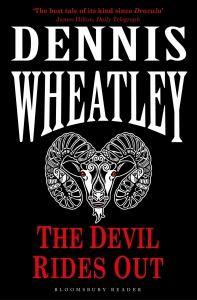
Devil Rides OutWhile fantasy forums and websites frequently gravitate to the newest and hottest titles, I have a serious soft spot for the classics, especially Pulp-Era fiction.  Readers today have been able to categorize everything into neat micro subgenres, but there was once a period which was more like the wild west of fantasy, where anything goes, and stories were constantly forging new ground.  And though authors like Lovecraft and Howard were certainly the most remembered trail blazers, they were hardly alone.  Among them was Dennis Wheatley.

I first became aware of Wheatley when my wife and I were visiting some older friends of ours.  While discussing writing and my love of Lovecraft, our hostess mentioned that when she was growing up in New Zealand, her favorite horror author was Wheatley.  I’d never heard of him, and quickly picked up a copy of his most famous horror novel The Devil Rides Out (1934).

The Devil Rides Out is the first of Weatley’s Black Magic series, but also a sequel to the extremely successful novel Forbidden Territory (1933), which was an action/adventure novel.  Please take a moment to appreciate this. Wheatley followed a normal and extremely popular adventure story with a supernatural horror.  This is pretty much the equivalent of Liam Neeson fighting vampires in Taken 2. Having not been aware that this was a sequel, I was very happy to see that the novel was written so that a newcomer like myself would quickly be brought up to speed on the characters and their histories.

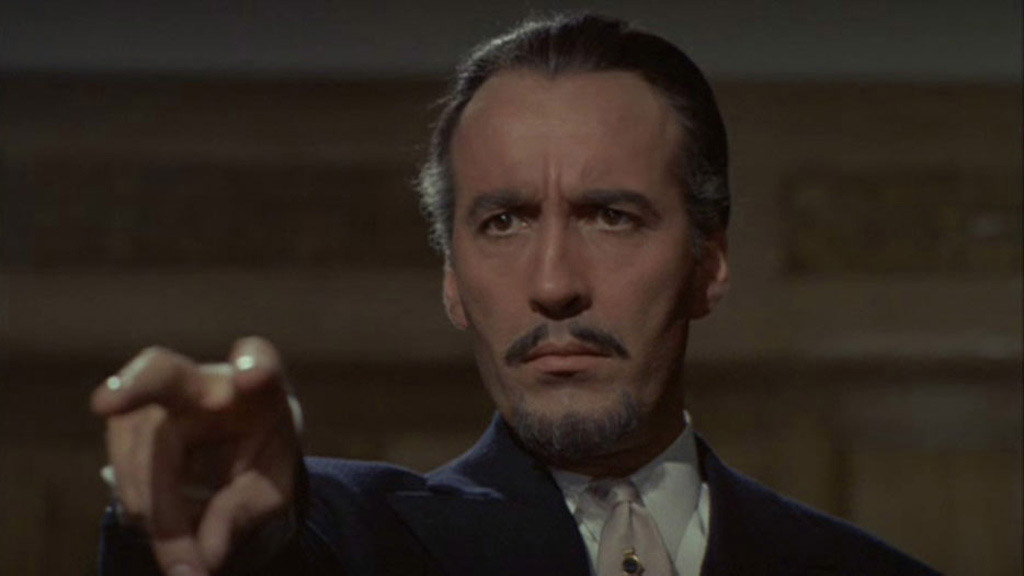
The story follows five characters, their leader the Duke de Richeau, is pretty much Christopher Lee.  Seriously.  Take Christopher Lee, the most bad-ass Renaissance man alive and just call him de Richeau.  Being that Wheatley wrote the character in the 1930’s we can assume that one of the following happened: A) Wheatley had access to a crystal ball and modeled the Duke after the future Lee,  B) The universe was so impressed with what a bad-ass the fictional Duke was that it immediately aligned the stars to make a then 11 year old Lee into the Duke, or C) A young Christoper Lee read the about the Duke and said, “Holy shit, I’m going to be this guy,” and promptly succeeded at it.  Given what I know about Christopher Lee and of Wheatley’s extremely thorough research into the occult, all of these are equally possible.  In fact, Christoper Lee enjoyed the novel so much that he played Duke de Richeau in the 1968 film version when he was finally old enough to play himself.

Duke de Richeau Christopher Lee

“Now the circle is complete.”

The heroes find themselves at odds with a group of Satanists who have kidnapped their friend in order to find an artifact of unspeakable evil: The Talisman of Set.  That doesn’t sound so bad, until you find out what exactly that is.  I’m not spoiling it for you, but trust me, the Talisman is kinda gross.  Armed with their wits, their devoted friendship, and the Duke’s formidable occult knowledge, the heroes endure hellish horrors as they chase the Satanists across Europe.

I found the story a lot of fun.  Yes, it’s dated.  But it’s also a fascinating time-capsule of pre-war British horror.  Wheatley gives a good jab at the Nazis at one point and it was interesting to see the thoughts about them so far before the start of the war.  It’s obvious that Wheatley did some incredible research for this book. I even read somewhere that he interviewed Aleister Crowley about it.  However some of the thorough occult information Wheatley pumps into the novel skates a narrow line between absolutely fascinating and boringly tedious.  But the histories and debates the Duke gives when convincing his friends that magic is real are simply wonderful.

The eternal 15 year old in me snickered several times through the book.  Not just the use of “ejaculated” as a means of speaking, but several strangely uncomfortable moments that they sort of charged through without the least acknowledgement of how weird that would be.  My favorite was when the heroes encounter a Satanic rite and they have to ward all of their bodily orifices with sanctified holy water to keep the evil out (Nine for men, ten for women).  For some reason you can not do this yourself and your friends have to apply the warding water to all of your holes.  I’m immature, I admit it, and if I ever found myself lurking in the woods outside a sabat with a hundred cannibalistic Satanists performing their evil before Baphomet himself, I doubt I’d have a single scruple in dropping my pants and ordering my best friend to ward my openings for protection.

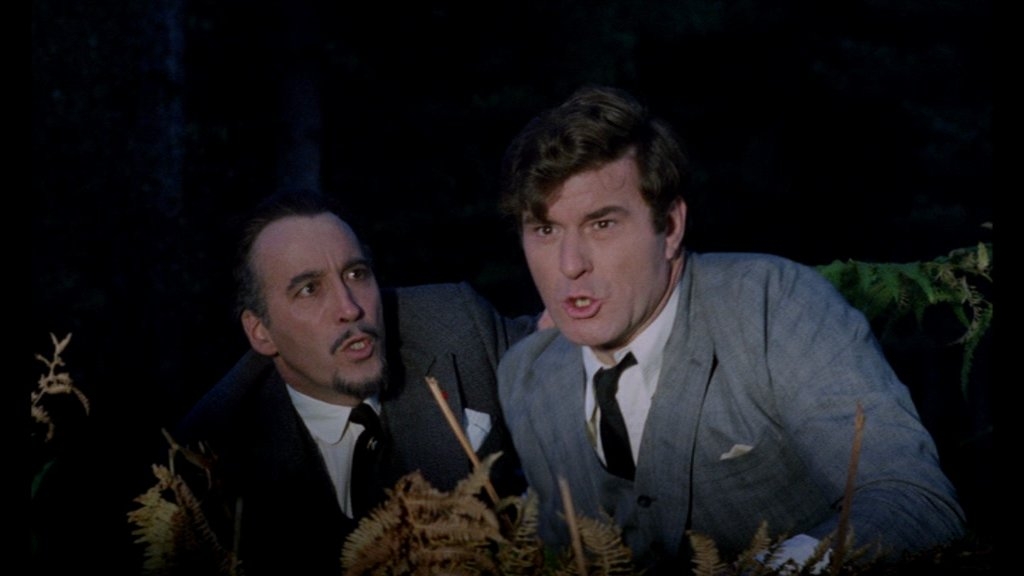
Rex and the Duke

“I’ve changed my mind.  Please seal my holes from evil.”

Another thing I enjoyed was the American character of Rex.  Being a proper British author, Wheatley made Rex the most steretypical loud-mouthed gung-ho kinda dense but lovable character he could.  It’s pretty clear that Rex epitomized Wheatley’s opinion of Americans and I found it quite entertaining.  I also wanted to reach into the book several times and choke Rex out.  He’s a nice guy, but damn he’s dumb. Best to think of him as a huge lovable dog.

Being a 80 year old book you can also expect some racism.  I’d been warned before hand and I didn’t find Wheatley’s racism to be that bad (I cannot say this about the next book, Strange Conflict).  But be warned.

Racism and awkwardness aside, I thoroughly enjoyed The Devil Rides Out.  I even used some of it in my Call of Cthulhu games.  I recommend it for anyone that enjoys classic horror or might be interested in something a bit different than the standard tropes we find in today’s Horror and Urban Fantasy stories.

After reading the novel I picked up the sequels.  I read Gateway to Hell(1970) and Strange Conflict(1941) out of order by mistake and am happy that I did.  Gateway to Hell was an OK sequel.  The first half was a tedious and boring travel guide to 1950’s South America, but the second half did a fine job of redeeming it (The book gets good the moment the Duke finally shows up). Still, I wouldn’t recommend it unless you LOVED the Devil Rides Out.  Also…bit more racist that the first book.  The second book, Strange Conflict, was terrible.  Fucking awful.  The setup was great, brilliant even.  It was awesome to read a story about the London Blitz that was written during the Blitz. Then we find that the Nazis are using occult powers to locate British ships and sink them. It started out so good, but much of the Duke’s dialogue was recycled word for word from Book 1, the beautifully set up plot plot fell absolutely flat and devolved into plain silly, and the incredible racism expressed was difficult for me to get through.  Seriously, please don’t think this is a call to act and see how bad it is.  It’s bad.  Best to avoid it. Also, with the incredible research Wheatley did on European occult in the first book, he did extremely little research into Haitian Voodoo, and pretty much latched on to the horror tropes that were coming out at the time.

The versions that I read were the Audible editions read by Nick Mercer.  Mercer did a fine job narrating and it greatly added to my enjoyments of the books.  If you want to try some classic British Horror, check out The Devil Rides Out.

Highlander: My Favorite Urban Fantasy

When people discuss the most influential or most genre-defining Urban Fantasies, the two most common names I see are the Dresden Files and the Anita Blake series.  And while both of those did forge serious ground in the Detective Noir Urban Fantasy genre, they’re by no means the first Urban Fantasies and aren’t even close to being my favorite in the genre.  That title belongs to the 1986 film Highlander.

For anyone not familiar with Highlander (which is a serious offense that I’m sure you will rectify the moment you are done reading this), the story follows an immortal who has secretly lived among us for 450 years. He must sword fight other immortals, killing them by severing their heads, and then absorbing their power.  As the centuries roll on, the last of their kind are drawn to New York City to battle each other until only one remains.  The movie spawned several terrible sequels (I secretly enjoyed Highlander III), a TV show, and even a cartoon that we’ll never discuss and that I shouldn’t have even acknowledged. It also gave Nerd Culture the infamous cry of, “There can be only one.”

I was 11 when I first encountered Highlander.  My brother came home from college, handed me a VHS tape, and said, “Watch this. You’ll love it.”  So, having no idea what the movie was about, or even what the word “highlander” meant, I popped it in.  Within a few minutes I was treated to a sword fight in a parking garage. The movie definitely had my interest.  In fact, even to this day, I can’t walk through a dark parking garage without picturing two men battling to the death with swords.  Then one of them got decapitated.  Being 11 years old, this was one of the most violent and awesome things I’d ever witnessed.  And right when I thought it couldn’t get any better, I was treated to lightning, exploding cars, and straight-up magic. At this point Highlander had my absolute and undivided attention.

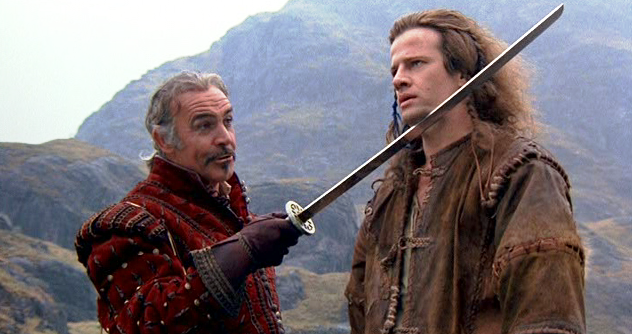
Which was good, because moments after this completely unexplained awesomeness, we’re suddenly transported back to 16th Century Scotland.  Only after several more flashbacks, and some rockin’ Queen music, we meet Sean Connery, who is a 2,000 year old Egyptian Spaniard with a Japanese sword and a Scottish accent (just go with it) who arrives to explain what’s going on.

Sean

After the movie I walked out of my house with the distant-eyed glaze of a prophet having just seen the future.  I told everyone about it.  It was the most incredible thing I’d ever encountered and I wanted the world to know.  Even now, 25 years later, I can look at Highlander, and while I now see its many flaws, I can’t help but be amazed at how mind-blowingly original it was.

That’s right, I just called an 80’s B-movie mind-blowingly original.  So let me explain…

Storytellers draw on the works written before them to craft something new. It’s pretty easy to see a story’s DNA.  For example, Dresden Files follows a style template that came from Pulp Era detective stories like those of Hammet and Chandler.  Those drew their inspiration from the earlier works of Sherlock Holmes. While yes, they’re very different with original elements, the influences are undeniable.

Highlander, however, is so freakishly original that there’s nothing else you can compare it to.  There is a teeny bit of inspiration they drew from Ridley Scott’s The Duelists, which follows two men who spend their lives repeatedly dueling one another.  But the whole immortal head-chopping lightning-shooting part seems to have come out of nowhere.  It’s so strikingly original that it’s impossible to use that element without being an obvious rip-off. Highlander is the beginning and the end of its own subgenre.

When I was a kid, I didn’t dream that I’d find some droids and get swept into the Star Wars Universe, or that I’d get a letter from Hogwarts or Xavier’s School for Gifted Children. I dreamed I’d be a sword-fighting immortal, battling it out behind the 7-11. I wanted a world where magic and and the fantasic were’t in some far away time or land, but right now, living in secret in our very world.


In the end, there can be only one.

18 Facts About Dämoren

Dämoren was released one year ago today.  In honor of the occasion, I wanted to share a few facts about it. And since Dämoren has 18 shells, I decided on 18 facts.

**Spoilers Below**

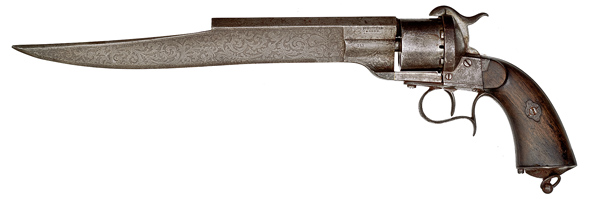
1:  Dämoren was originally planned to have been built by the Italian gun-maker Beretta. But when researching, I learned that Beretta didn’t do much work with revolvers in the late 19th Century.  It was changed to a Holland & Holland pistol, a British gun-maker. It wasn’t until after finding pictures of Joseph-Célestin Dumonthier’s cutlass revolvers that I changed it to a Dumonthier pistol and added the blade.

Dumonthier Engraved

2:  There are 21 characters living in the chateau when Matt arrives, him making 22. I’d originally planned for five more, but decided I already had more than enough characters.

3:  The demons that inhabit the jade masks are shishi lions.

Shishi

4:  The Valducans can confirm 46 holy weapons at the beginning of the book.  They discover one more, bringing the total to 47.  By the end, there are 36 (with a 37th being rebuilt).

5:  Matt being a male character was a last-second decision.  Because I was already so far outside my comfort zone by writing something other than Sword & Sorcery, I decided to make him male.

6:  The Valducan’s airplane is a Fokker F27 turboprop.

F27

7:  Max Schmidt was named after actor Max von Sydow. However, his character was inspired by Walter from Hellsing.

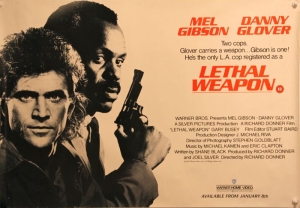
8:  The Mel Gibson movie that Matt watches in his Canadian motel room is Lethal Weapon.

Lethal Weapon Quad

9:  Dämoren takes place in 6 countries and 3 continents (7 countries if you count the interludes).

10:  Neil Gaiman’s use of informational interludes in American Gods inspired their use in Dämoren.

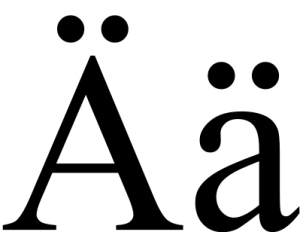
11:  Dämoren’s name was rooted off of the German word  dämon, which means, demon. While I personally love the umlaut in the title, the problems that readers might face when typing searches for it led us to listing it as Damoren on Amazon and Goodreads. 

Unlaut

12:  There was a cut chapter that explained that Ben and Natuche were in a secret relationship. Ben deeply regretted that he never told Natuche that he was in love with her. The chapter was cut because it was the only chapter that wasn’t in Matt’s Point of View and it stuck out.

13:  Dämoren took 15 months to write.

14:  The Wendigo attack in Chapter 1 takes place in upstate New York off of Kinzua Lake. My wife’s family owns a cabin at the same location.

15:  Aside from their holy weapons, the Valducans use several firearms. Matt uses a Mac10 Ingram.  Luiza and Luc both use a SIG Sauer P226 (Luc’s is tan). Allan uses a Walther PPK.  Malcolm caries a sawed-off Remington double barrel. Kazuo uses a WWII Colt M1911.  Jean uses a Steyr AUG at the mine scene. Schmidt carries a .357 Magnum revolver. Ben carries a 5-shot .38 Special.

16:  Demonic breeds shown in Dämoren are: Wendigo, Strutter, Ghoul, Vampire, Werewolf, Oni, Ifrit, Hellhound, Lamia, Rakshasa, Succubi, Itwan, Shishi, Tiamat, and an unnamed orange thing. Demonic breeds mentioned, but not shown are Aswang, Sigben (a.k.a. Chupicabra,) Tengu (the bird-headed thing in Matt’s story), and an unnamed bipedal horned lizard.

17:  Chapter 1 is obviously a prologue, but because so many people have expressed a dislike for prologues, and often skip them, I labeled it Chapter 1.

18:  Lunar eclipses are a major plot point to the novel.  There was a total lunar eclipse on the night Dämoren was released*

Blood Moon

Bonus 19th Fact: (because Dämoren regained one shell):  Dämoren’s technical stats – Seven-shot single action centerfire revolver.  11mm bullet.  Loading gate on left side. Eight-inch octagonal barrel with ten-inch blade. Gold leaf. Small red gems along barrel and a prayer (without “amen.” That’s on the bullet.) The handle is straight, angled down. It is ivory and capped with two wolves heads in bronze.

*OK, technically the next day, but in the early AM before sunrise, so I’m counting it.

Review and Interview Over at The BiblioSanctum

When I was writing Hounacier and seeing all the wonderful feedback and praise for Dämoren, I started getting a little worried that my drastic change of style for the second book was going to disappoint some readers and reviewers who might have been looking forward to something much more like Book 1.

So far, it looks like everyone has been very happy with the change of themes for Hounacier.  Mogsy at the BiblioSanctum gave it 4-Stars. Same rating she gave Dämoren, and trust me, four stars from Mogsy is no small accomplishment. The reason she’s so respected as a reviewer is because she’s frugal with those stars.

She wrote: “If you like your UF dark, brutal and completely unflinching about the fact, then Valducan is the series for you.”

You can read the entire review here.

After reading it, she asked to interview me about the series, where it all came from, and why I chose to switch protagonists for Book 2. It was a great feeling to go from “Man, I really hope she doesn’t hate it,” to “She liked it so much that she wanted to find out more.” You can read the interview here.

Finally, I’ve been asked several times about the Audiobook for Hounacier.  Well, I’m happy to report that I spoke with R.C. Bray earlier this week and he’s signed on to narrate it.  Unfortunately, the price of using such a talented and successful narrator is that he’s in high demand and his schedule is loaded.  So he’ll begin recording in June.  But they say good things come to those who wait and I’m thrilled to have him back for Hounacier.  With the Audie awards coming up this May, and R.C. Bray’s three nominations (including Dämoren) chances are pretty good that he’ll be getting a whole lot busier very soon.

The Love For Unlikely Names

Hello My name is

A few weeks back I was lurking around on a fantasy forum and reading a post about Hounacier’s release.  One commenter stated that while he liked the concept of the story, he hated the name Matt Hollis. They went on to state that Matt Hollis would be the name of a garbage man or some office worker, and that they just couldn’t believe that a badass demon hunter would have such a blasé name.

My response was a simple eye-roll without comment.  Can’t please everyone, right?  However, the idea that our badass heroes are expected…nay…REQUIRED to have equally badass names stuck with me.  I mean, how many heroes have sweet, sweet names?

As an author, the task of choosing the perfect name for a character can be very stressful. I mean, we get to name them anything and we want it to be something that fits them.  We want a name that potential readers will see and instantly think, “Badass.”

 While the first names can be real short and basic, like something from a Dashiell Hammett crime novel – Jack, Nick, Sam, or Frank – sometimes they can also have some of those end of the alphabet letters, such as Xavier, Zane, or Vince.  Those are all real names. I’ve known someone named each of those. But the real kicker is in the last name.  A perfect last name is usually a word with a double meaning – Cross, Knight, Steele, Reaper, Fury, Cage, Thorn, Castle, Crow.  Colors are also good – Grey, Black, Scarlet, even White (But as Steve Buscemi will tell you, Pink just isn’t as cool.)

Fictional characters aren’t the only ones with cool names.  Many actors change their names to something more punchy (Did you really think his name was Nick Cage? Did you not read the formula above?).  And not just Hollywood actors either, porn stars have some spectacularly unlikely names. 

Personally for me, I don’t like names like that.  They feel fake. They feel forced or just full of themselves.  I think of Robin Hood: Prince of Thieves when Robin asks Azeem if he gave himself that name.  Of better yet, the scene in Mystery Men when Monica asks what Mister Furious’ real name is.

Mystery Men Roy

 I write fantasy. My goal is to make you believe on some level that magic, monsters, and convenient circumstances are all perfectly believable.  Suspension of Disbelief is a finite resource, and I’d rather not waste it by giving my characters names that are only slightly more likely than the fantastical things that they do.  (At least Harry Dresden has a perfectly good in-story reason for his name).  My biggest goal when naming Matt, Allan, Luiza, or any of my other characters*, was that they were believable.  My second goal was the names weren’t already taken by some real-life celebrity or ruthless criminal that I wasn’t aware of.

I’d always thought that unlikely names were acceptable only for comic book or James Bond characters. Evidently I was wrong.  To each their own.

 So, what’s your favorite unlikely character name? 


*Except Malcolm…I named him after my favorite space cowboy, I totally admit it.


New Store and Some Free Fiction

For those that have been wanting a Tyenee Pendant from my Black Raven stories can find one on this site.  So far I only have the copper pendants.  Depending how they go, I’ll be expanding to Bronze, Silver, and the others.  I did have a few gold pendants made for myself and a few others.  There is one gold left and will be doing some special giveaway for it in the future.

In other news, several years ago I narrated my story The Mist of Lichthafen for the TTA Press podcast, Transmissions From Beyond.  It was a lot of fun.  However, TTA eventually pulled the podcast site down.  So I finally uploaded my recording to YouTube and SoundCloud for people to enjoy.


For those not familiar with the story, The Mist of Lichthafen was originally published in Black Static Magazine and was my first sale. It’s a heist/horror story, and while it’s technically not a Black Raven story, it shares the same world and themes. Many of the places in Mist of Lichthafen also appear in the Black Raven adventure Thieves Duel.  The quality of the recording is okay.  I wish my mouse wheel wasn’t so loud and there is a moment where I fail horribly as doing a little girl’s voice. But it’s still fun.  

Hope you enjoy it.
 

Guest Blogs and Events

With two book releases in a single month, everything has been busy.  However, I’ve found the time to write several guest blogs concerning my new books as well as my thoughts on the genre.

At RisingShadow I have, Pulp Heroes: Why We Love Them.  I discuss how pulp heroes are not just some forgotten heroes of a bygone era and why they appeal to us (hint: I talk about James Bond).

SF Signal hosted , Sword and Sorcery: A More Intimate Fantasy, where I explain why I think Sword & Sorcery is a much more fun and relatable genre than Epic Fantasy.

Over at The Quillery, I shared, So We Saved The World…Now What?. There I discuss how sequels needlessly have to up the stakes in every installment and why I rebelled against that in Hounacier by simply changing them. 

At Singular Points I have, Story Inspirations: The History and Hidden Places of New Orleans.  Here I share the story of how I hadn’t planned to write Hounacier as Book 2 until a trip to New Orleans completely changed my mind.

Check them out.  If you like them, or have anything to add, please leave a comment.  I’d love to hear everyone’s thoughts.

Ragnarok Publications is hosting a Facebook Release event on Monday March 21st 8-10EDT.  We’ll have some guest authors (Cat Rambo, Kenny Soward, Jaym Gates, Tim Marquitz, and Lincoln Crisler), give away some free books (I’ll be giving out an Audible version of Damoren and a Black Raven pendant), and have ourselves a good time.  Come by. Laugh with us. Score free stuff.

Finally, for anyone in the Dallas-Fort Worth area, I’ll be speaking at the Tarrant County College Trinity River Campus on April 16th at 2:00.

That’s all for now.